SFP+ to RJ45: what to know before you order
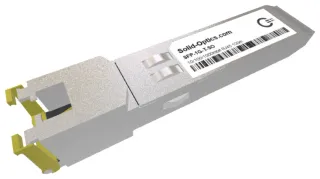
Got a switch with SFP+ ports and a server, NAS or firewall with a 10G RJ45 port? This module turns the SFP+ port into RJ45, so you run 10GBASE-T over a regular Cat6a cable. Handy, but a copper module is not an optic: it draws more power, runs hotter and reaches less far. Here is what to watch.
Reach: 30 m over Cat6a
The 10GBASE-T standard reaches 100 m, but it was written for built-in RJ45 ports. An SFP+ module has less power and cooling, and this module is specified for 30 m over Cat6a. So measure your route before you order: if the cable runs longer, pick an optic with a patch cable. For short links in the same rack a 10G DAC cable uses less power and costs less.
Power and heat
The 10GBASE-T chip transmits over four pairs at once and cancels echo and crosstalk. That costs around 2.5 to 3 W, more than an SFP+ port supplies by default. Many switches handle it, but not on every port at once. This helps:
- Don't put all modules side by side: leave a port empty or put an optic in between.
- Check your switch's datasheet or manual for how many 10G-T modules it allows.
- Keep an eye on the temperature through your switch's own sensors: this module has no DOM and is specified for 0 to 70 °C.
Speed and coding
This module runs 10G. If you have a device that talks 1G, 2.5G or 5G, check both module and switch port: on a regular 10G port it usually stays at 10G. For 1G there is the 1G RJ45 SFP. Pick your switch's vendor under Coding and we code the module before shipping, at no extra cost. Not sure your platform accepts it? Ask us and we'll find out.
When to pick something else?
For a link between two switches in the same rack a DAC cable is almost always better: no heat, no extra power and a lower price. Between rooms or floors, fiber with two optics is more stable. This RJ45 module is mainly the answer for devices that only have a copper 10G port, such as many servers, NAS systems and firewalls. In that case, also check the cabling: Cat6a or better, and no adapters along the way.