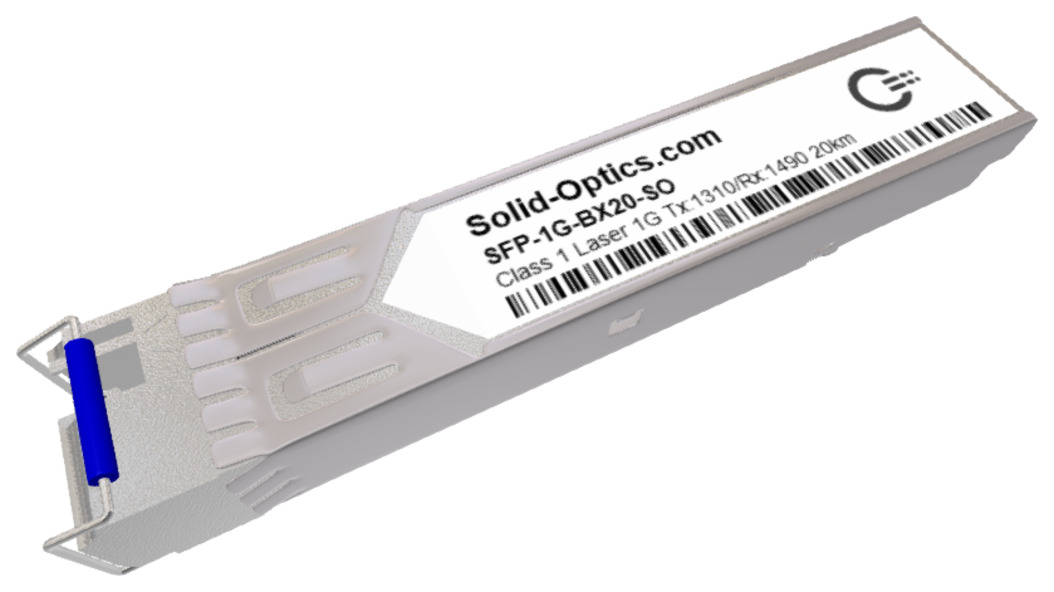
SFP 1G BiDi: how to pick the right pair
Only one fiber free between two sites, or don't want to burn two fibers on a single 1G link? Then you want a BiDi SFP. Below: how BiDi works, why you always order a U and a D module, and which reach and coding to pick.
One fiber, two wavelengths
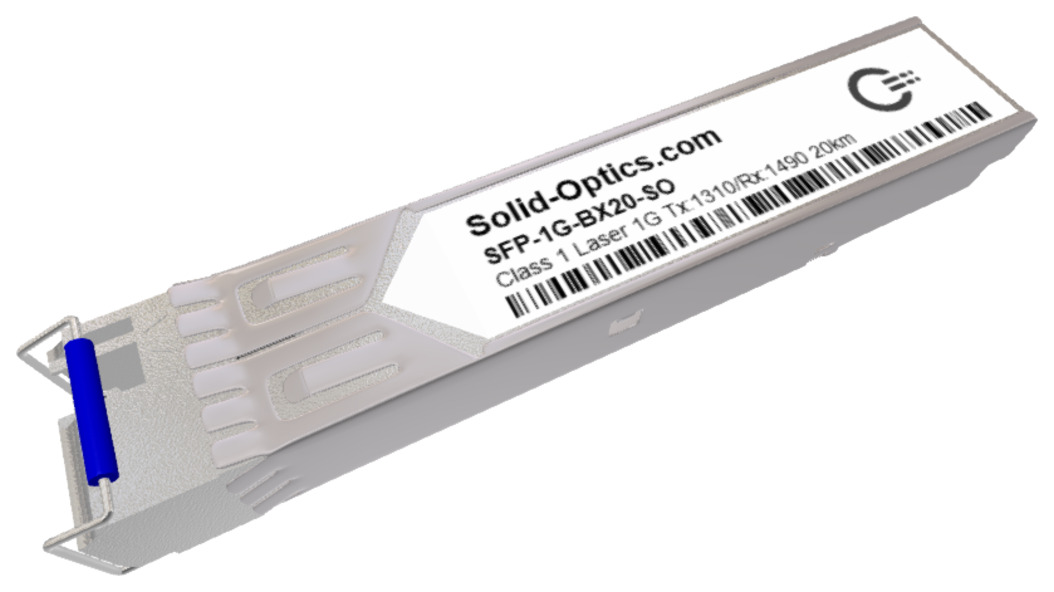
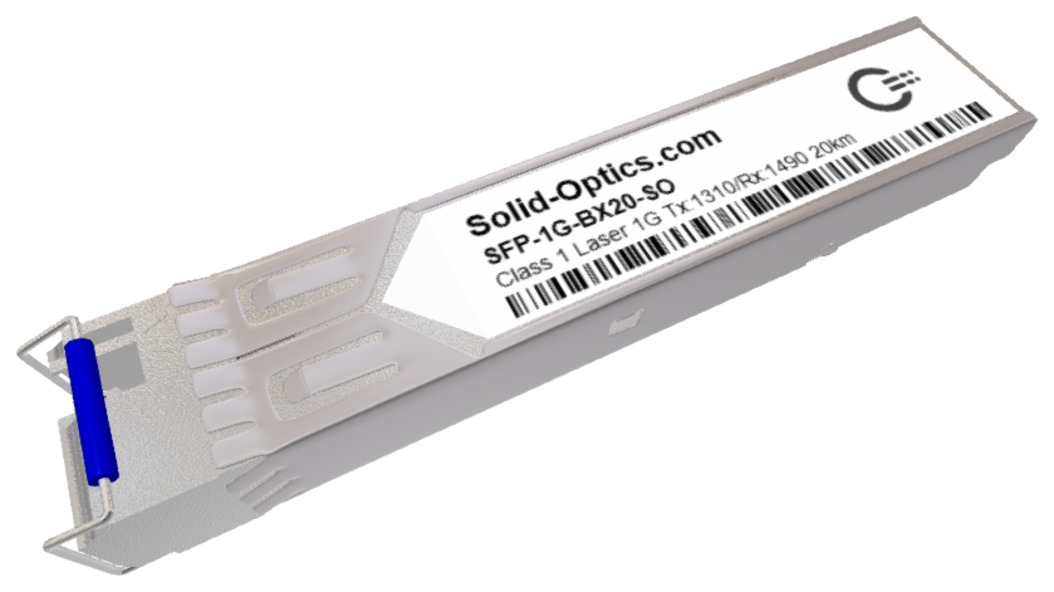
A regular duplex SFP uses two fibers: one to transmit, one to receive. A BiDi SFP does both over a single single-mode fiber. Each end transmits on a different wavelength, and a built-in WDM filter separates outgoing from incoming light. For 1G BiDi up to 40 km those are 1310 nm and 1490 nm; for 80 km, 1490 nm and 1550 nm.
Always order a pair: U and D
Because the wavelengths have to mirror each other, every link needs two different modules. At 20 and 40 km the U variant transmits at 1310 nm and receives at 1490 nm; the D variant does the opposite. Two U's or two D's will never give you link, however clean your fiber is. The SKU tells you straight away: GLC-BX-U20-SO and GLC-BX-D20-SO together make a 20 km pair. Pick the wavelength for one end in the selector and add its counterpart right away.
Reach: BX10, BX20, BX40, BX80
The number in the name is the reach in kilometres. 1000BASE-BX10 is the IEEE standard for 10 km; BX20, BX40 and BX80 are common market names that follow the same logic. These are the pairs you can order from us:
- 20 km — GLC-BX-U20-SO (1310/1490 nm) and GLC-BX-D20-SO (1490/1310 nm)
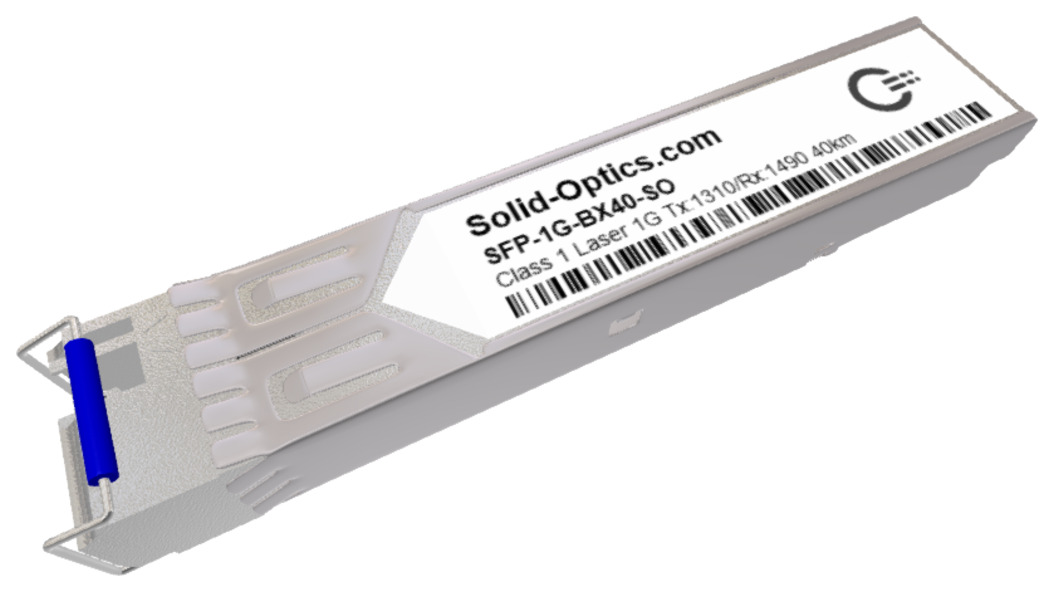
- 40 km — GLC-BX-U40-SO (1310/1490 nm) and GLC-BX-D40-SO (1490/1310 nm)
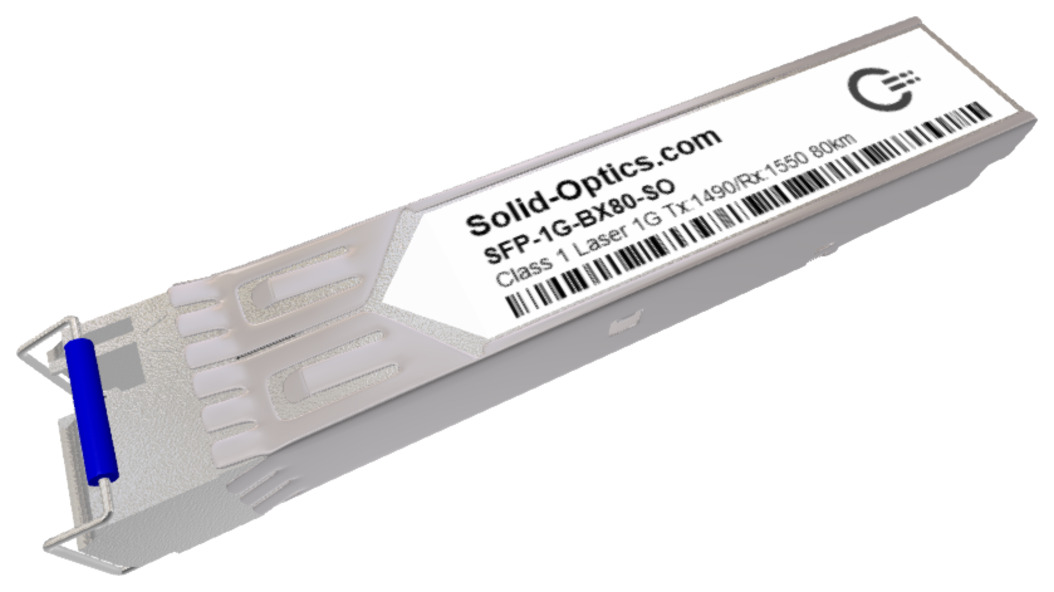
- 80 km — GLC-BX-U80-SO (1490/1550 nm) and GLC-BX-D80-SO (1550/1490 nm)
Always pair a U and D of the same reach, and don't go bigger than you need. A 40 or 80 km optic on a short link can overload the receiver at the far end; then you need an attenuator. After plugging in, read the RX power via DOM so you know where you stand. The 80 km pair runs on 1490/1550 nm because single-mode fiber has much lower attenuation around 1550 nm than around 1310 nm. So a U80 only works with a D80.
Connector and fiber
All our BiDi modules have a simplex LC connector: one fiber, one LC. If your fiber comes in on SC, you need an SC-LC patch cord. Use single-mode fiber (OS2): these optics are not made for multimode. Need 10G? Then pick the SFP 10G BiDi on 1270/1330 nm.
Coding for your platform
Many switches read the vendor ID from the optic's EEPROM and log a warning or keep the port down for a module they don't recognise. So pick your platform under coding: Cisco, Juniper, Arista, MikroTik, Ubiquiti or one of the other vendors in the list. We code the module before it ships. For switches without a vendor check, pick MSA (Generic). Want a spare pair ready for when a link drops? Read how to sort spares and same-day replacement.